project achievements
By integrating renewable energy and environmental programs, RDAB is reducing poverty, creating green jobs, improving health, and building resilience in rural Nigeria. These initiatives also contribute directly to achieving Nigeria’s commitment to the United Nations Sustainable Development Goals (SDGs), particularly in energy, environment, and climate action.
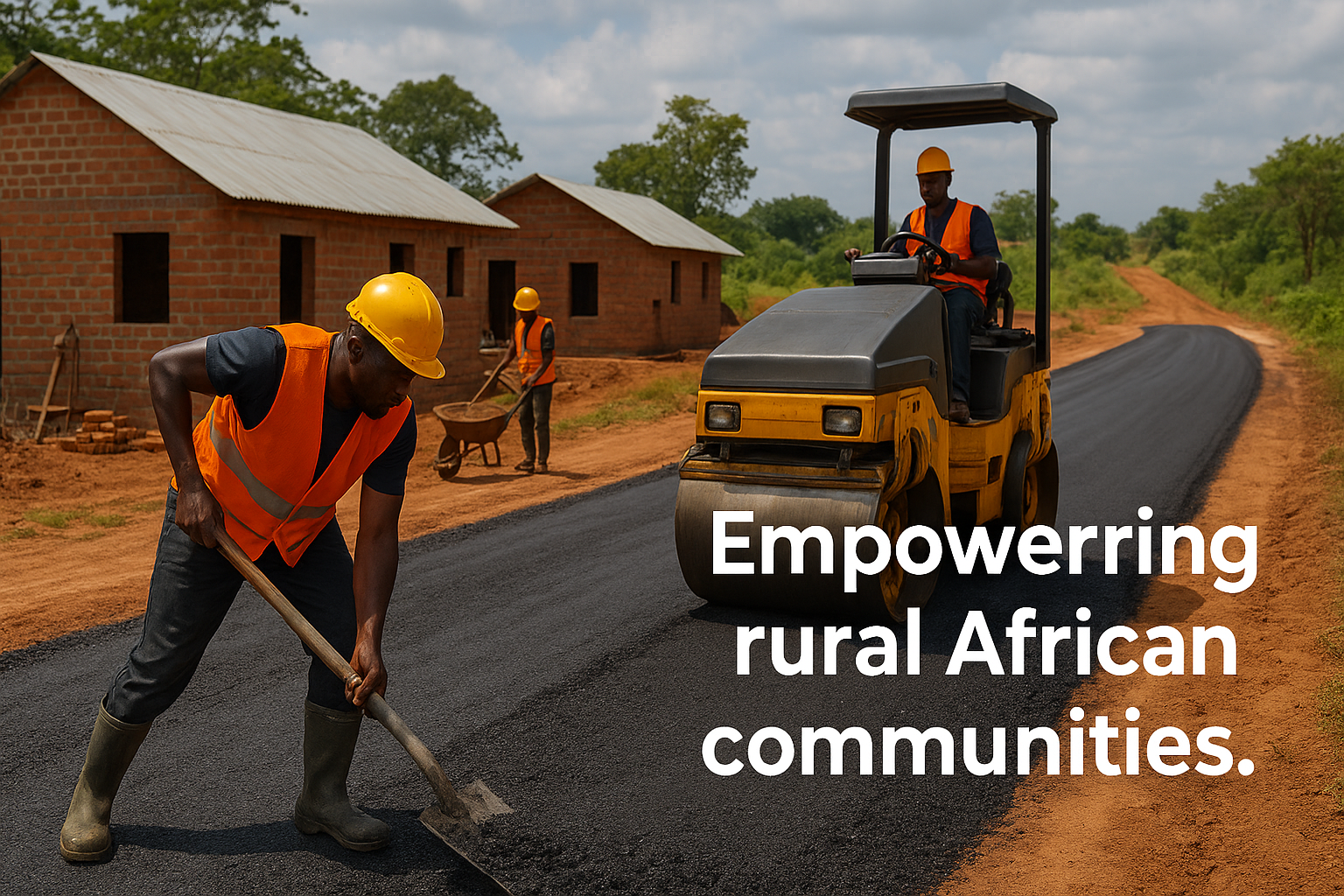
1. rural road network expansion
Key Highlights:
- Over 2,000 km of rural feeder roads constructed or rehabilitated in five states.
- Bridges built to connect communities previously cut off during rainy seasons.
- Reduction in travel time and transport costs for farmers and traders by up to 40%
Summary:
The RDAB has executed a major rural road expansion project, constructing and rehabilitating more than 2,000 kilometers of feeder roads across several rural states. These roads connect remote farming communities to markets, healthcare facilities, and schools. Bridges and culverts were installed to ensure year-round access, especially during rainy seasons when flooding often isolates villages. Transport costs for agricultural produce dropped significantly — by about 40% — making farming more profitable and incentivizing higher yields. Improved roads also facilitated delivery of services and supplies, contributing to better health outcomes and economic opportunities in rural areas.
clean water & community boreholes initiative
Key Highlights:
- Installation of 500+ solar-powered boreholes servicing rural communities.
- Clean water access for over 200,000 people across multiple local government areas.
- Significant drop in waterborne illnesses and reduction in time spent fetching water.
Summary:
RDAB’s Clean Water & Community Boreholes Initiative has delivered 500 solar-powered boreholes to rural villages, bringing clean, safe water to over 200,000 Nigerians in underserved regions. By leveraging solar energy, these boreholes operate cost-efficiently and reliably even in off-grid areas. Families — especially women and children — no longer need to walk long distances with heavy containers, freeing up time for schooling, farming, or other economic activities. Reports in participating communities show sharp declines in waterborne diseases, improved hygiene practices, and enhanced overall health. This project has helped to build trust in public services and improved the quality of life for many rural households.
solar electrification & mini-grid rollout
Key Highlights:
- Deployment of 120 solar mini-grids providing electricity to 80+ remote rural settlements.
- Rural schools and clinics powered, enabling extended study hours and medical refrigeration.
- Households able to use lighting, charging points, small appliances; replacement of kerosene lamps.
Summary:
RDAB’s Solar Electrification & Mini-Grid Rollout has brought sustainable power to more than 80 remote rural settlements through the installation of 120 solar mini-grids. These mini-grids power key community infrastructure—schools and clinics—allowing for extended evening schooling, refrigeration for vaccines and medicines, and better overall service delivery. Residents are now able to replace unreliable, polluting sources of light such as kerosene lamps with clean and reliable lighting and charging facilities. Household incomes improve as small businesses can operate longer into the night. By using renewable energy, the project also reduces carbon emissions and places rural communities at the forefront of sustainable development.